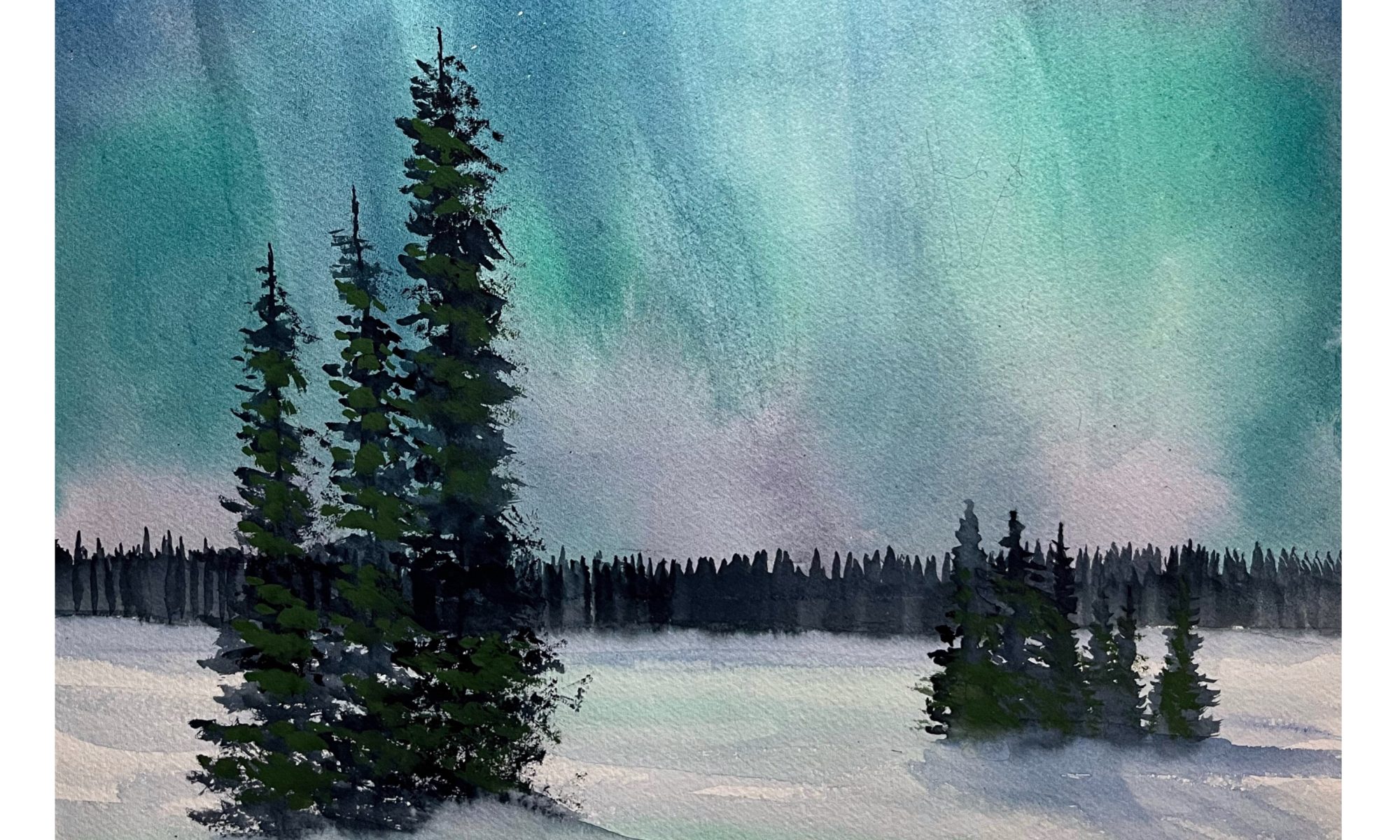
“I’m afraid I have no choice but to sell you all for scientific experiments.”
– Monty Python, The Meaning of Life
Lately, I’ve been working on an experiment, working with watercolour ground. This is an acrylic primer with an additive, such as chalk or sodium bicarbonate, that adds to the absorbency and can be used for painting watercolour on nontraditional surfaces such as wood, metal, or more related to my experiment, canvas.
Frames for larger painting are quite expensive, and can cost half of the purchase price of a painting. Stretched canvases are considerably less expensive, and I can buy a package of 7 11×14 canvases for the third of a package of 5 frames the same size. So, I have been trying out watercolour ground on canvases.
I’ve tried three different types, although I am prone to use one not of US manufacture. The European brand I tried has turned out to be a favourite.
I’ve had mixed results. The first painting I did was sold 5 minutes after posting it on social media, The second was a dud.
I have done a few more and I’m starting to enjoy doing it, although I am not fond of the prep time. This involves two coats of gesso, which much completely dry, followed by two coats of watercolour ground. These must dry completely before working, 48-72 hours depending on brand.
Here’s a few examples.
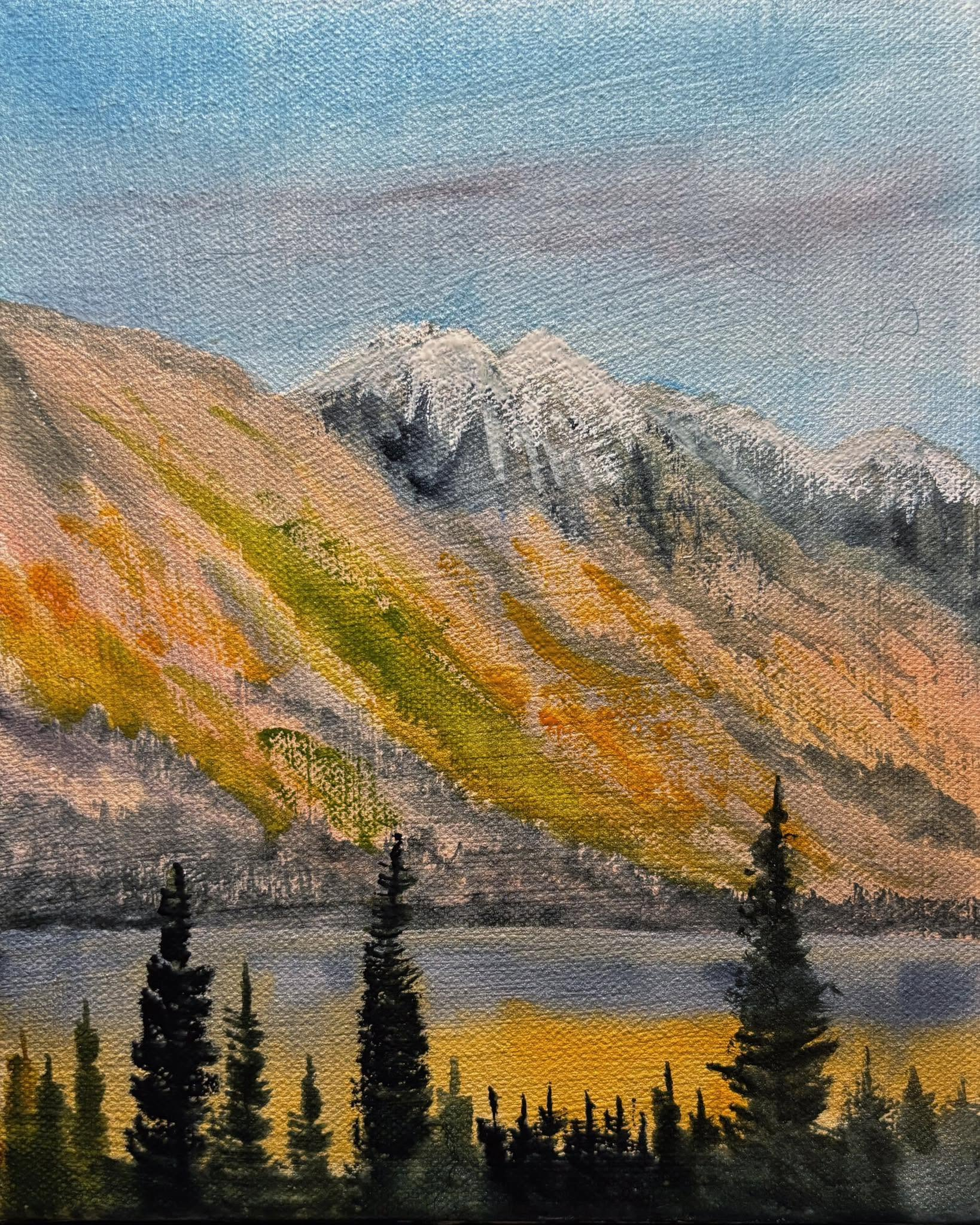
Annie Lake. Watercolour on canvas, 8×10 inches.
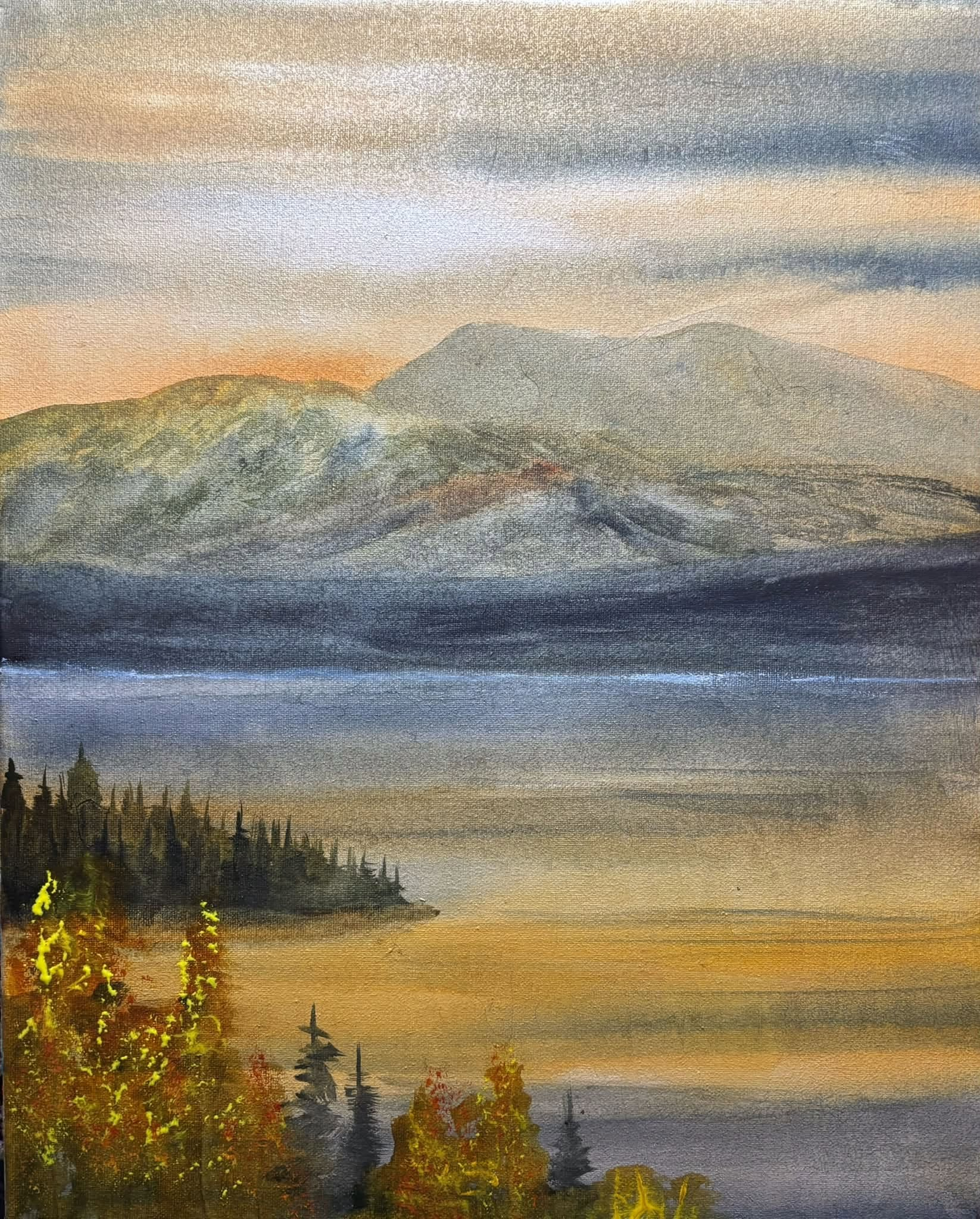
Fox Lake. Watercolour on canvas, 16×20 inches.
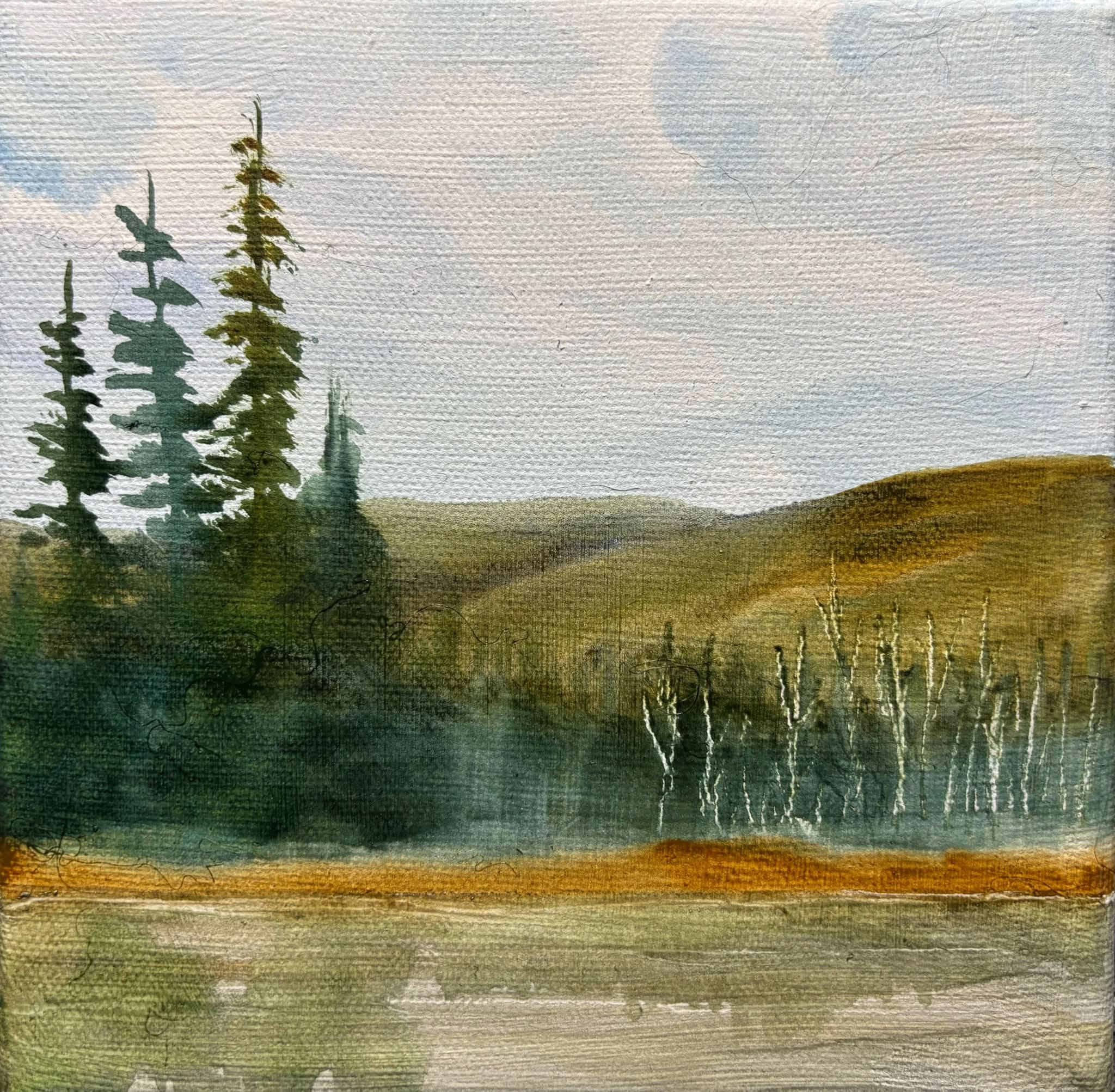
Chadburn Lake #1. Watercolour on canvas, 6×6 inches.
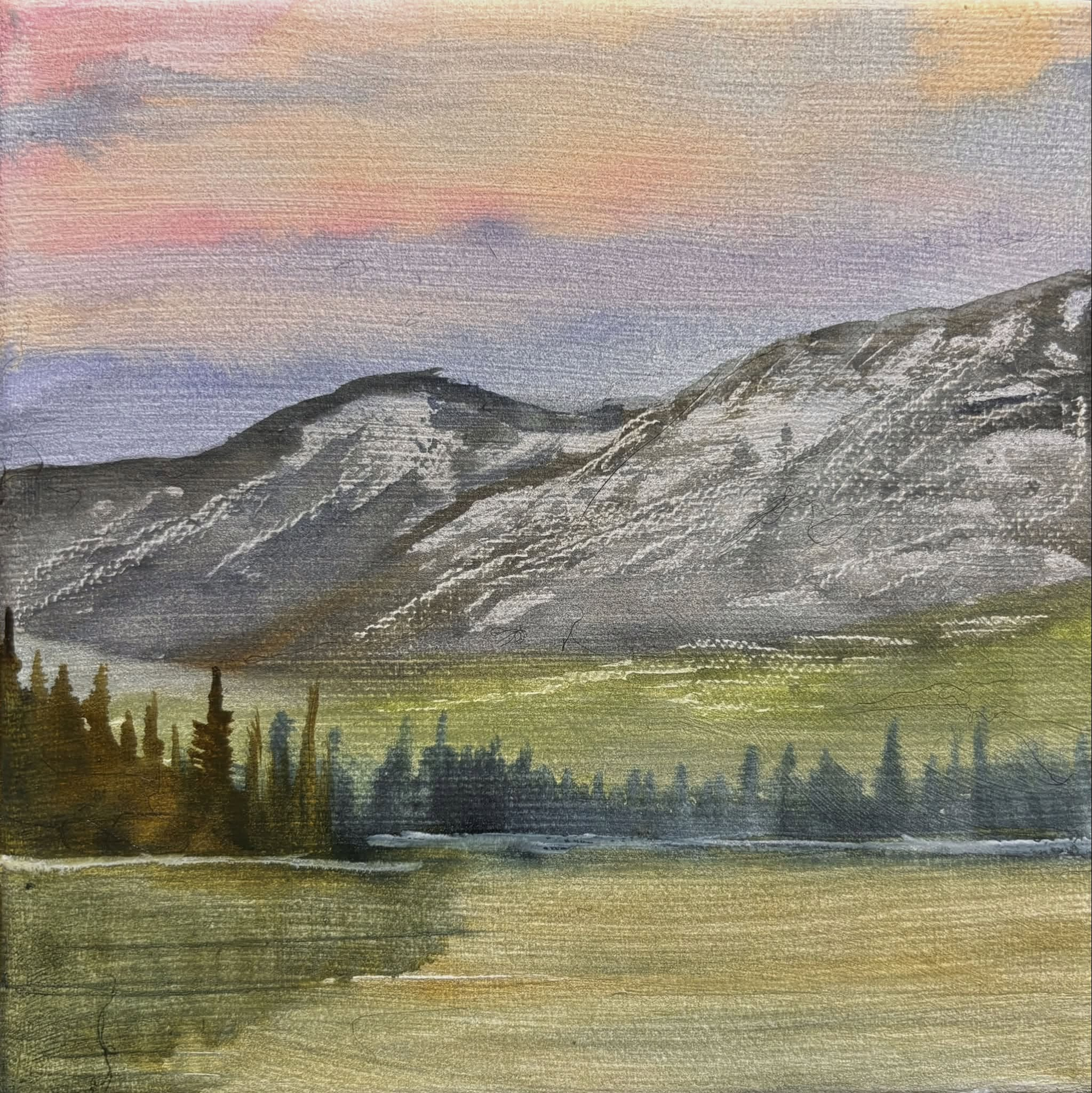
Chadburn Lake #2. Watercolour on canvas, 6×6 inches.

