Do the dead speak?

As we stand for two minutes of silence, we remember those who are not able to communicate with us directly because they did not return from their term of service.

But, even though we are no longer able to hear their voices, the dead do speak. They speak when you cast a ballot in an election. Their words resound when you wear a crucifix, or a yarmulke, or a kirpan, or a hijab. They are heard in every letter to the editor, or when 3,000 march to protest the hypocritical closing of the Veteran’s Affairs office in Sydney.  They echo when you join a union, a political party, a club or group of any type.

Do the dead speak? They speak every day. Our job is to listen.
Remembrance Day

On this Remembrance Day, like others, I am constantly amazed at how lucky we were that all of our immediate relatives who served in recent memory came home.

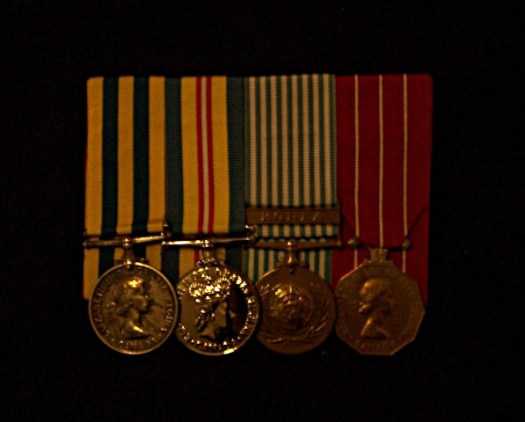
Dad's medals

Dad’s medals, Korean Service medal second from right.

My mother’s three older brothers served in bomber crews through much of World War II. Dad served on a destroyer in Korea.

For some frame of reference, the average life span of a bomber crew member during most of the war was three missions. While the navy was certainly safer in Korea, we did take losses on the HMCS Iroquois in 1952 and this is always a possibility in war.

All but Uncle Bob are gone now, but on this day, we remember all of those didn’t return, or returned broken. They went willingly. And all of them, whether for the Boer War, Spain, World Wars I and II, Korea, a myriad of peacekeeping missions, Bosnia, Kosovo, Kuwait, Afghanistan or Libya, went knowing that they may not return. That, in itself, is worth remembering, and probably for more than one day a year…